

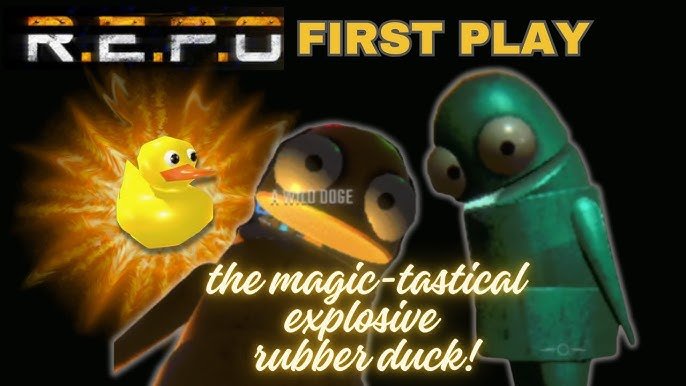
Ready for controlled chaos? Meet Repo’s Rubber Duck—your not-so-average explosive weapon. It’s bouncy, unpredictable, and intimidating. More than a grenade with a weird twist, it’s that wildcard move when you need results, fast. If you want early momentum or a clutch comeback in mid-game, this weapon delivers big impact for those who dare.
Understanding the Rubber Duck
So, what exactly is the Rubber Duck? It’s a throwable explosive you buy from the Service Station after missions. Think of it as a high-risk, high-reward gadget. Technically, it’s classified as a bouncy, unpredictable grenade. But unlike the usual, it won’t explode on first impact. Instead, it ricochets around the room, building up speed and tension, keeping everyone guessing.
You don’t need a perfect strategy. You need to know how to unleash chaos at the right moment. Early and mid-game, this is your secret weapon when other options are too slow or too expensive.
Cost and Availability
Let’s get straight into numbers. Expect to pay anywhere from $15,000 to $18,000 for one Rubber Duck at the Service Station. Some runs might charge you up to $20,000, but that’s the outlier. This makes it the pricey choice among throwables, but still a bargain compared to bigger, flashier options.
Don’t count on finding it every run. The Rubber Duck pops up randomly in post-mission shop rotations. So, plan for it but don’t pin your entire strategy on its guaranteed presence. When it shows, and you’ve got spare cash, scoop it up.
You don’t need to hoard. You need to buy when the price is right and the mission calls for it.
Core Mechanics
Forget what you know about straight-shooting projectiles. The Rubber Duck is pure chaos in motion. Once thrown, it bounces off every floor, wall, and ceiling it touches. With each bounce, it gets faster, more dangerous, and more unpredictable.
Don’t bother with direct throws unless you want to gamble. Bank shots—ricocheting it off the environment—give you a shred of control. And that can mean the difference between big gains and spectacular failure.
The effective range for detonation is about ten meters. Playing too close? You’re asking for a messy self-knockdown or worse. Respect its blast zone, and always keep your team’s positions in mind.
Damage Potential
Let’s strip away the myths and focus on what matters: damage. The Rubber Duck operates with two layers: impact damage and explosion damage. Both can make or break your run.
On explosion, it deals about 250 damage in a radius of roughly ten units. That’s enough to wipe out swarms of small-to-medium enemies and seriously wound big threats. Each bounce has around a 10% chance to trigger the blast. So, sometimes it pops after three bounces, sometimes it tears up the whole room before going off.
There’s also the impact angle. Hit something at speed? That’s a straight 50 damage per contact. If you throw it hard enough, even the duck’s body can flatten a stubborn enemy or trip up a threat.
You don’t need to blow up every enemy. Sometimes, you just need to buy time or free a choke point.
Interaction with Players and Environment
Think the Rubber Duck is safe? Think again. Its chaos doesn’t discriminate—players, teammates, and precious loot are all fair game. While it usually won’t kill your teammates outright, it will knock them down, stun, and leave your squad exposed at the worst moment.
Even worse, valuables aren’t immune. The Duck can break the goods you’re hunting, cutting into your profits and grinding mission momentum to a halt. Tossing it recklessly? That’s a cut in your final payout.
You don’t need perfect aim. You need situational awareness. Throw where it helps, not where it hurts.
Effective Strategy for Usage
Ready to learn how to exploit this weapon for maximum advantage? Here’s the playbook.
1. **Buy Smart:** Only grab the Duck if you’ve covered your essentials and the price is right. Keep your buying disciplined.
2. **Set Up Bank Shots:** Don’t throw directly at enemies. Stand to the side and bounce it off walls or floors near threats. You’ll control its chaos and avoid friendly fire.
3. **Pick the Right Rooms:** Small, tight spaces amplify ricochets and lock enemies in with danger. Corridors and boxy arenas are your best allies.
4. **Don’t Hug the Action:** Always give yourself space. The Duck wants to come back and say hi. Keep clear, or risk your run with friendly knockdowns.
5. **Save It for Emergencies:** Don’t waste power. When your team is at risk of losing ground, that’s when the Duck shines.
You don’t need fancy tactics. You need to act fast and bank on the odds.
Situational Usage in Missions
Every mission has that moment: you’re swarmed, pinned, or need a bailout. That’s Duck time. Deploy it against clusters—small guys, quick movers, even some beefy monsters if they’re packed in. If you see a group that a single 250-damage blast can erase, let it rip.
It’s far less useful in open, sprawling areas. The Duck loves walls. Without them, it rolls off harmlessly or explodes in empty space, wasting your money. Save it for built-up interiors, dead ends, or linked rooms where bounce after bounce stacks the odds.
Worried about bad PR with your squadmates? Call out your throw, keep the team wide, and make sure nobody cuts into its unpredictable path.
Distinguishing Between Rubber Duck Boss and Item
Don’t get burned by confusion. The Rubber Duck boss and item might share the same cheery exterior, but they’re worlds apart.
The boss version is an anomaly—a wild card with AI, appearing as an event in maps like Playroom or Hydro Labs. It teleports, mimics sounds, and soaks up bullets unless you figure out its tricks. The item, by contrast, is your tool: buyable, throwable, and totally under your (questionable) control.
One’s a threat you overcome. The other’s a weapon you learn to master—or regret using carelessly.
Key Stats Recap
Skim this when you need the facts, fast:
– Type: Throwable explosive, bounces off all surfaces
– Cost: $15,000–$18,000 (max $20,000)
– Trajectory: Gathers speed, unpredictable, angles matter
– Explosion chance: About 10% per bounce (expect 3–10 bounces per average use)
– Explosion damage: 250 in a 10-unit radius
– Impact damage: 50 per high-speed direct hit
– Effects: Stuns and knocks down players, can smash valuables, loves chaos
Don’t trust luck. Trust these numbers and act accordingly.
Conclusion
Here’s the truth. The Rubber Duck isn’t for the timid. It rewards guts, discipline, and players who love calculated chaos. Embrace its unpredictable nature, but always control your own outcomes.
Smart use gives you massive leverage in early to mid-game. Mishandle it, and you’ll tank your own mission. Play to its strengths—a weapon of opportunity, not a crutch for lazy aim. The Duck will never replace sharp movement or intelligent positioning, but it opens doors when other weapons can’t.
You don’t need boring consistency. You need options that punch above their weight. The Rubber Duck gives you chaos on your terms, if you set up the right shot.
Player Tips and Advice
Want to run a tight team? Call your throws, warn your partners, and keep them spread out. Use the Duck only in rooms where everyone’s out of splash range. If someone insists on stacking close, let them eat the next knockdown as a teachable moment.
Solo? Even better. You have zero excuses. The Duck is yours to experiment with—bank shots, risky clears, or showboating. Just check the environment first. You don’t need a perfect plan, just a willingness to own the blast zone.
Trying to stretch your budget as an entrepreneur or freelancer? The lesson here’s the same. Spend where it pays off, not where everyone else does. Focus on high-impact tools. Skip the fluff brands and “best practice” routines. Find the bouncy, unpredictable moves that give you real results and reinvest in what multiplies, not what drains.
In fact, being bold with your choices—whether in weapons or business—separates fast-learners from the slow. That’s how low-lift, high-impact tools flip the script on what’s possible. Want more ways to maximize your wins with less risk? Try reading Small Business Line for tips on punching above your financial weight.
Remember: You don’t need a perfect plan or perfect aim. You need action, readiness, and just enough care to keep yourself in the game. Play smart, take risks, and make your next mission count.
Read Also This: